A selective, brain-penetrant GalR1 antagonist restores cholinergic signaling in vitro and rescues cholinergic cognitive deficits in mice
Introduction
Alzheimer’s disease (AD) is a progressive neurodegenerative disorder characterized by cognitive decline. It represents the most common cause of dementia, affecting >30 million people worldwide[1]. Despite decades of research and clinical testing, AD remains a major unmet medical need, with no cure available. Current standard-of-care treatments are largely symptomatic and include historical cholinesterase inhibitors[2–4] (donepezil, rivastigmine, and galantamine) and the NMDA receptor antagonist memantine[5,6]. More recent anti-amyloid treatments (lecanemab and donanemab) provide only modest clinical benefit[7,8] while posing significant safety risks such as cerebral hemorrhage[9,10] and brain volume loss[11]. In light of the marginal efficacy and poor safety profile of existing AD drug classes, drugs targeting new AD mechanisms are necessary.
A promising yet understudied pharmacological target in AD is the galanin signaling axis[12,13]. Galanin is a neuropeptide expressed throughout the brain and peripheral nervous system, with diverse roles in metabolism[14], sleep[15], nociception[16], mood/stress[17,18], and learning/memory[12,13,19]. Galanin signaling was first implicated in AD pathology several decades ago from the findings that AD patients exhibited strong upregulation of galanin[20,21] and increased innervation of galanin-containing neurons[22–24] compared to healthy individuals in the basal forebrain — a key AD-relevant brain region where loss of cholinergic tone drives cognitive decline[25,26]. In parallel, mechanistic studies showed that galanin treatment inhibited acetylcholine release in ex vivo hippocampal slices from rodents[27,28] and primates[29]. Furthermore, consistent with a role in cognitive function, central galanin administration (via intracerebroventricular injection) and transgenic galanin overexpression impair performance across multiple rodent behavioral tasks[19,30,31]. These findings outline a mechanism in which galanin exacerbates cognitive symptoms of AD by reducing cholinergic tone, implying that cognitive symptoms could be improved by blocking galanin signaling in the brain. Indeed, this was illustrated in proof-of-concept studies in which intracerebroventricular injection of the galanin receptor antagonist M40 rescues galanin-induced cognitive deficits in rodents.[33,34]
Translating galanin receptor antagonism into a viable therapeutic strategy requires addressing two practical constraints: receptor subtype selectivity and sufficient CNS exposure. Galanin signaling occurs through three G-protein coupled receptors (GPCRs): GalR1–3. GalR1 and GalR3 primarily activate Gi/o signaling and are implicated in mediating the inhibitory effect of galanin on acetylcholine release[35–38]. On the other hand, GalR2 primarily activates Gq/11 signaling[35] and has been linked to neuroprotection in in vitro studies[39,40]. These receptor subtype differences motivate a strategy focused on selectively inhibiting GalR1/3 while sparing GalR2 to avoid counterproductive blockade of GalR2-associated protective signaling[32,41]. Moreover, achieving CNS exposure for galanin receptor antagonists is a major hurdle, as most potent galanin receptor antagonists reported to date are peptides that do not efficiently pass the blood-brain barrier[42–45]. As a result, in vivo testing of these compounds has relied on direct CNS delivery[33,34], which is not a viable therapeutic route in humans.
In this paper, we introduce PAC-832, a novel, selective, brain-penetrant small-molecule GalR1 antagonist, and we characterize its pharmacology in both in vitro and in vivo assays. We show that PAC-832 selectively inhibits GalR1 (IC50 = 0.28 μM) based on a functional cAMP readout in GalR1-overexpressing CHO-K1 cells, exhibiting >30-fold selectivity over GalR2 and GalR3 (IC50 > 10 μM for each). We further show that PAC-832 reverses GalR1-mediated acetylcholine suppression in cholinergic SH-SY5Y cells. Finally, in a mouse model of cholinergic dysfunction, we show that intraperitoneal administration of PAC-832 rescues performance in the Y-maze spontaneous alternation and novel object recognition tests. We test PAC-832 alongside the acetylcholinesterase inhibitor donepezil and demonstrate comparable efficacy between the two compounds in these tests.

Results
Subtype-selective functional antagonism of PAC-832 at GalR1
To quantify the effects of PAC-832 on all galanin receptor subtypes, we generated CHO-K1 cell lines stably overexpressing GalR1, GalR2, or GalR3 (Methods; Supplementary Figure 1). We quantified the activation of GalR1 and GalR3 in their respective stable cell lines based on intracellular cAMP levels measured by ELISA, with forskolin and IBMX added to the cells to raise basal cAMP levels[46] (Methods). As expected, galanin treatment by itself produced a significant concentration-dependent suppression of forskolin-induced cAMP in GalR1-CHO and GalR3-CHO cells (p = 2.5×10⁻⁹ and p = 1.3×10⁻⁶, respectively; Supplementary Figure 2). Pretreatment with pertussis toxin (Gi/o-signaling blocker) abolished the inhibitory effect of galanin on cAMP levels in both cell lines (Supplementary Figure 3), confirming that the decrease in cAMP levels was dependent on Gi/o signaling. In GalR2-CHO cells, galanin treatment resulted in a nominally significant but much smaller decrease in cAMP levels (p = 0.03, Supplementary Figure 2), consistent with the fact that GalR2 predominantly couples to Gq/11 rather than Gi/o[35]. Accordingly, we instead quantified GalR2 signaling in GalR2-CHO cells using a calcium fluorescence assay[46] (Methods). In this assay, galanin evoked a significant concentration-dependent increase in intracellular Ca2+ fluorescence (p = 8.8×10⁻¹⁴, Supplementary Figure 4), confirming functional GalR2 signaling through Ca2+ mobilization.
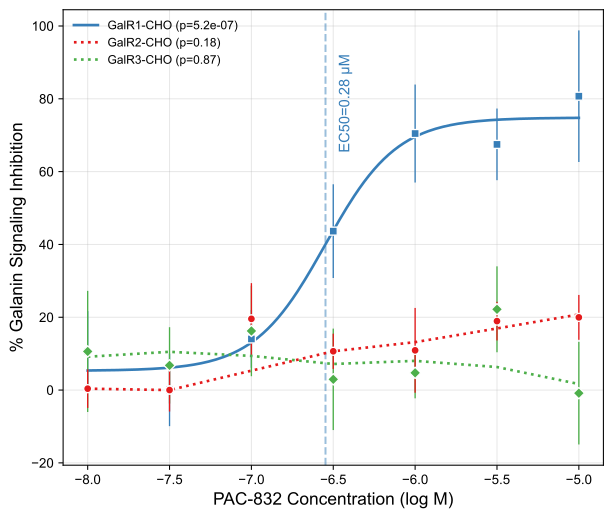
Having established robust functional responses to galanin in our cell lines, we evaluated PAC-832 antagonism at all galanin receptor subtypes. In GalR1-CHO cells, PAC-832 reversed cAMP suppression in a concentration-dependent manner when co-administered with galanin (Figure 2). Logistic regression yielded a significant concentration response curve (p = 5.2×10⁻⁷, sum-of-squares F-test, Methods), with a maximal effect of 74.8% inhibition, and an IC50 of 0.28 μM (95% CI: 0.128–0.629 μM). PAC-832 treatment without galanin did not measurably alter cAMP levels in GalR1-CHO cells (p = 0.31, Supplementary Figure 5).
In GalR3-CHO cells, PAC-832 did not measurably reverse galanin-induced suppression of cAMP at concentrations up to 10 μM (p = 0.87, Figure 2, Supplementary Figure 5). In GalR2-CHO cells, PAC-832 likewise did not reduce the galanin-induced Ca2+ response at concentrations up to 10 μM (p = 0.18, Figure 2, Supplementary Figure 6). Together, these data demonstrate that PAC-832 is a functional antagonist at GalR1 at sub-micromolar potency, with no detectable functional antagonism at GalR2 or GalR3 up to 10 μM across the primary signaling pathways measured for each receptor subtype.
PAC-832 reverses galanin-inhibited acetylcholine release in vitro
We next assessed the downstream effects of PAC-832 on acetylcholine (ACh) release in SH-SY5Y cells, a human neuroblastoma cell line. SH-SY5Y cells are not natively cholinergic; however, serum starvation and concurrent treatment with retinoic acid (RA) followed by brain-derived neurotrophic factor (BDNF) has been shown to differentiate them toward a cholinergic-like phenotype[47,48]. Consistent with these reports, we observed that differentiated SH-SY5Y cells released significantly more ACh than undifferentiated cells upon treatment with high K+ buffer (quantified using ELISA; Methods; Supplementary Figure 7). To verify that the ACh release was Ca2+ dependent, we repeated the experiment in calcium-free buffer with EGTA (calcium-chelating agent), observing that the K+-induced ACh increase was abolished (Supplementary Figure 7). Together, these results confirmed that our differentiated SH-SY5Y cells could be used to model Ca2+-dependent ACh release.
We generated SH-SY5Y cells stably overexpressing GalR1 (Methods; Supplementary Figure 8), then differentiated them following the same RA+BDNF protocol as before. Similar to the wildtype SH-SY5Y cells, we observed that differentiated GalR1-SY5Y cells released significantly more ACh than undifferentiated GalR1-SY5Y cells upon depolarization with high-K+ buffer (Supplementary Figure 9). To verify that GalR1 activation inhibited the release of ACh in our differentiated GalR1-SY5Y cells, we pre-treated the cells with galanin to activate GalR1 before K+ treatment. We observed that galanin inhibited K+-induced ACh release in a concentration-dependent fashion (p = 1.7 × 10⁻⁶, IC50 = 1.2 μM, maximal inhibition = 59%; Supplementary Figure 10). Pre-incubation with pertussis toxin abolished the inhibitory effect of galanin on ACh release (Supplementary Figure 11), while galanin treatment in wildtype differentiated SH-SY5Y cells had no effect on ACh release (Supplementary Figure 10), confirming that the inhibitory effect of galanin on ACh release was Gi/o-dependent and mediated through GalR1 in our cells.
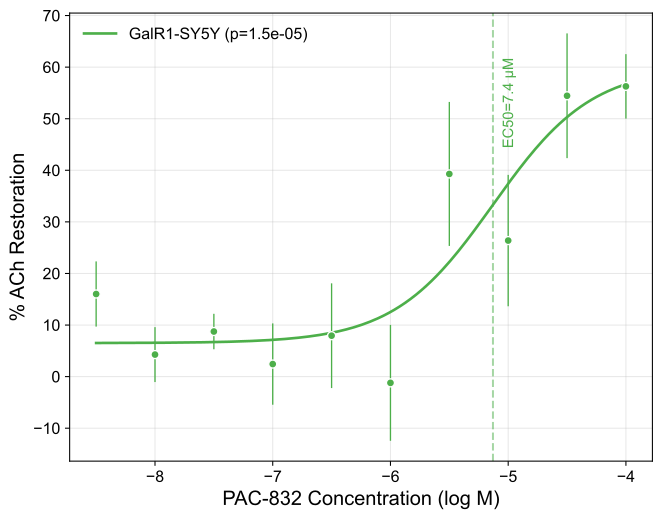
Having established a functional in vitro model of GalR1-mediated ACh suppression, we evaluated the effects of PAC-832 treatment in this model system. We co-incubated the cells with PAC-832 and galanin prior to K+ stimulation. We observed significant concentration-dependent rescue of ACh release due to PAC-832 (p = 1.5 × 10⁻⁵, Figure 3), with a maximal rescue of 54%, and an EC50 of 7.4 μM (95% CI: 1.1–52.6 μM). In the absence of galanin, PAC-832 treatment had no effect on ACh release in differentiated GalR1-SY5Y cells (p = 0.76) or wildtype SH-SY5Y cells (p = 0.92, Supplementary Figure 12). Together, these results show that GalR1 activation significantly reduces K+-induced ACh release in vitro, and that PAC-832 treatment rescues ACh release via its inhibitory action on GalR1.
Pharmacokinetic profile and brain exposure of PAC-832 support in vivo testing
Having established potent and selective GalR1 antagonism in vitro, we confirmed that PAC-832 achieved sufficient brain exposure for in vivo testing. We quantified plasma and brain concentrations of PAC-832 in C57BL/6 mice after a single intraperitoneal dose using HPLC-UV (Methods). At 1 h after a 30 mg/kg dose (matching the intended 1 h post-dose time point used for behavioral testing), total plasma and brain concentrations were X and X respectively, corresponding to a brain:plasma ratio (Kp) of X. Equilibrium dialysis gave fu,plasma of X and fu,brain of X (Methods), yielding a Kp,uu of X. The resulting unbound brain concentration of X exceeded the GalR1 cAMP IC50 by X-fold, demonstrating robust unbound brain exposure at the behavioral timepoint.
PAC-832 improves performance in cognitive tasks in scopolamine-induced mouse model
We next assessed the effects of PAC-832 on cognitive performance in a mouse model of cholinergic dysfunction[49]. We administered scopolamine to healthy male 8-week-old C57BL/6 mice (Methods) to block cholinergic signaling in the brain and induce transient memory impairment. We then assessed spatial working memory using Y-maze spontaneous alternation[50] (Methods) and recognition memory using novel object recognition[51] (NOR; Methods), with and without co-administration of PAC-832.
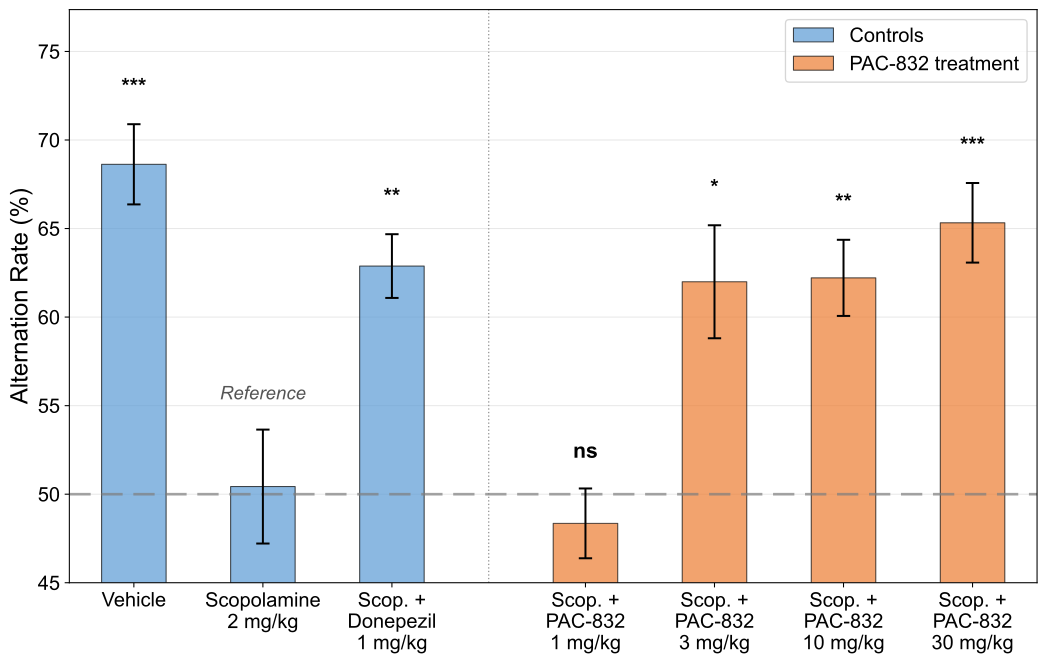
As expected, in the Y-maze, scopolamine administration (2 mg/kg) by itself significantly reduced spontaneous alternation rate relative to vehicle controls (vehicle: 68.6 ± 2.3 (s.e.m.) vs. scopolamine: 50.4 ± 3.2; p = 5.5×10⁻⁵; N = 25 per group). Meanwhile, treatment with the cholinesterase inhibitor donepezil prior to scopolamine significantly increased alternation rate (62.9 ± 1.8, p = 0.002 compared to the scopolamine-only group), serving as a positive control.
Upon treating the mice with PAC-832 prior to scopolamine, we observed that the alternation rate was restored in a dose-dependent manner (Figure 4). Mice exhibited significantly increased alternation rate for PAC-832 doses of 3 mg/kg (62.0 ± 3.2; p = 0.015 compared to the scopolamine-only group), 10 mg/kg (62.2 ± 2.1; p = 0.0046), and 30 mg/kg (65.3 ± 2.2; p = 5.9×10⁻⁴), but not at 1 mg/kg (48.4 ± 2.0; p = 0.59). The total number of arm entries was not significantly different between any of the treatment groups (Supplementary Figure 13), demonstrating that the differences in alternation rate between groups were not driven by locomotor activity.
In the NOR task, scopolamine administration similarly reduced novel object discrimination index relative to vehicle controls (vehicle: 0.261 ± 0.067 (s.e.m.) vs. scopolamine: −0.056 ± 0.083; p = 0.005; N = 25). Treatment with the positive control donepezil resulted in a significant increase in discrimination index (0.200 ± 0.074; p = 0.028 compared to the scopolamine-only group).
Upon treating the mice with PAC-832 prior to scopolamine, we observed that the discrimination index was restored in a dose-dependent manner (Figure 5). Mice exhibited a significant increase in discrimination index for the 10 mg/kg (0.145 ± 0.047; p = 0.045) and 30 mg/kg dose (0.250 ± 0.052; p = 0.004), but not the 3 mg/kg (0.003 ± 0.076; p = 0.60) or 1 mg/kg dose (−0.019 ± 0.074, p = 0.74). We observed a small decrease in total exploration time for the scopolamine-only group but not any of the other treatment groups (Supplementary Figure 14), demonstrating that differences in discrimination index were not driven by locomotor activity.
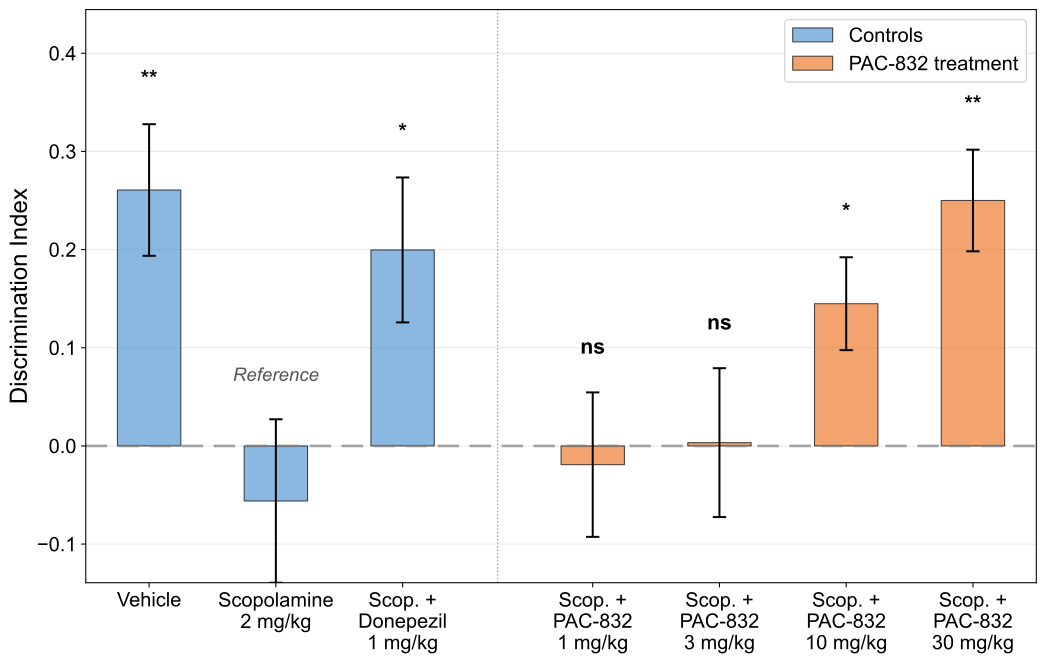
Together, these results demonstrate that PAC-832 reverses scopolamine-induced deficits across two complementary cognitive assays at doses of 10 mg/kg and above.
Conclusion
In this study, we introduce PAC-832, a new brain-penetrant small-molecule GalR1 antagonist, and we evaluate its activity at receptor-level pharmacology, downstream cholinergic effects in vitro, and behavioral outcomes in vivo. In functional assays, PAC-832 selectively antagonized GalR1 signaling (IC50 = 0.28 μM) while showing no detectable functional antagonism at GalR2 or GalR3 up to 10 μM, establishing a clear receptor selectivity profile. Meanwhile, in differentiated cholinergic SH-SY5Y cells, PAC-832 dose-dependently reversed galanin-mediated suppression of acetylcholine release. Finally, PAC-832 improved performance in scopolamine-challenged mice in both Y-maze spontaneous alternation and novel object recognition, with efficacy comparable to the cholinesterase inhibitor donepezil.
Together, these findings support PAC-832 as an attractive preclinical candidate for a tractable, systemically dosed, brain-available GalR1 antagonist with measurable functional effects across in vitro and in vivo assays.
Materials and Methods
Cell culture
CHO-K1 and SH-SY5Y cells were purchased from ATCC (CHO-K1: CCL-61, SH-SY5Y: CRL-2266). Cells were cultured at 37°C in 5% CO2 and were routinely passaged using 0.25% trypsin-EDTA. CHO-K1 cells were maintained in F-12K (Kaighn’s modification) supplemented with 10% fetal bovine serum (FBS) and 1× penicillin-streptomycin. SH-SY5Y cells were maintained in 1:1 DMEM/F-12 supplemented with 10% FBS and 1× penicillin-streptomycin. All cell culture reagents were purchased from Gibco.
Expression plasmids encoding human GalR1, GalR2, and GalR3 in the pcDNA3.1(+) vector were purchased from the cDNA Resource Center (https://cdna.org/). Plasmid identity was confirmed by Sanger sequencing (Elim Bio). Plasmids were transformed into E. coli via electroporation and plated on LB agar containing carbenicillin (100 μg/mL). Single colonies were expanded in LB broth containing carbenicillin (100 μg/mL) at 30°C for 24 hours. Plasmid DNA was isolated from the E.coli using the AccuPrep Plasmid Mini Kit (Bioneer) according to the manufacturer’s protocol.
CHO-K1 and SH-SY5Y cells were transfected in 96-well plates using plasmid DNA and Lipofectamine 3000 (Thermo Fisher) following the manufacturer’s protocol. Selection with G418 (Gibco, 10131035) was initiated 48 hours post-transfection at 1600 μg/mL (CHO-K1) or 500 μg/mL (SH-SY5Y) for 14 days. Surviving clones were expanded and maintained in growth media containing 500 μg/mL (CHO-K1) or 200 μg/mL (SH-SY5Y) G418.
Stable line validation
Receptor overexpression in stable CHO-K1 and SH-SY5Y clones was confirmed by RT-qPCR (Supplementary Figures 1, 8). Total RNA was extracted from cells using the Quick-RNA Miniprep Plus kit (Zymo Research) according to the manufacturer’s protocol. 100 ng RNA was used per reaction for one-step SYBR Green RT-qPCR (Hifair Advanced One-Step RT-qPCR Kit, Yeasen) on a Roche LightCycler 96 instrument. Primer sets included two internal receptor-targeting primers per receptor, a receptor–bGH junction primer pair (transgene-specific), and housekeeping genes Gnb1 and Fkbp1a for CHO-K1 cells (GAPDH and RPL32 for SH-SY5Y cells; Supplementary Table 1). Cycling conditions were 50°C for 6 min (reverse transcription), 95°C for 5 min, followed by 40 cycles of 90°C for 15 s and 60°C for 30 s with fluorescence acquisition. Relative expression was quantified using the ΔΔCt method normalized to the geometric mean of the housekeeping genes.
cAMP assay
CHO-K1 cells were seeded in 96-well tissue-culture plates (Corning) at 5×10⁴ cells/well in complete growth media without G418 24 hours prior to testing. For the pertussis toxin controls, 100 ng/mL pertussis toxin (Cayman Chemical, 19546) was included in the growth media. On testing day, assay buffer (HBSS with 10 mM HEPES and 0.1% BSA; Gibco) was prepared and supplemented with 200 μM IBMX (Arctom Scientific, BD-A459882) and 100 μM forskolin (Arctom Scientific, CS-1454). Galanin (Arctom Scientific, HY-P1127) solutions were prepared by serial dilution of galanin stock (500 μM in water) into assay buffer. PAC-832 (custom synthesis) solutions were prepared analogously by serial dilution of PAC-832 stock (1 mM in DMSO) into assay buffer. Blank DMSO was added as needed to ensure a constant final DMSO concentration across all conditions.
For testing, growth media was aspirated and cells were incubated with 100 μL per well of compound-containing assay buffer for 15 minutes at room temperature. Following incubation, assay buffer was removed and cells were lysed by addition of 100 μL/well 0.1 M HCl for 20 minutes. Intracellular cAMP in the lysate was quantified using a commercially available cAMP ELISA kit (Cayman Chemical, 581002) following the manufacturer’s protocol. Specifically, cell lysate was diluted 1:5 in ELISA buffer and transferred to a 96-well ELISA plate, and cAMP tracer and antiserum were added per kit protocol. A cAMP standard curve and appropriate buffer-only controls were included on each plate. After overnight incubation, plates were washed and developed with Ellman’s reagent for 30 minutes, then absorbance was measured at 410 nm using a Biotek Synergy HTX plate reader. Raw absorbance values were converted to cAMP concentrations by back-calculating from the standard curve fitted to the cAMP standards (logit-linear fit), per kit protocol. Computed cAMP concentrations were normalized to the per-plate buffer-only controls as appropriate.
All buffer preparation and liquid handling (media aspiration/dispense, serial dilution, reagent additions, and transfers) was performed using an OpenTrons OT-2 liquid handling robot. Protocol code for all experiments is available here. Raw plate reader data, per-well processed concentrations, and analysis code are deposited here.
Calcium flux assay
CHO-K1 cells were seeded in 96-well tissue-culture plates (Corning) at 5×10⁴ cells/well in complete growth media without G418 24 hours prior to testing. On testing day, assay buffer (HBSS with 10 mM HEPES and 0.1% BSA; Gibco) was prepared and supplemented with 2.5 mM probenecid (Ion Biosciences, 7300P-100) to block dye efflux from the cells and 500 μM Brilliant Black (Arctom Scientific, AK-O836) to reduce background fluorescence. Galanin and PAC-832 solutions were prepared via serial dilution into assay buffer in the same manner as the cAMP assay.
For testing, growth media was aspirated and cells were washed 2 times with 150 μL/well PBS to remove serum-containing media. Next, 50 μL of dye loading solution containing 3 μM Fluo-4 AM (Ion Biosciences, 1041F), 2.5 mM probenecid, and 1× pluronic F-127 (a detergent that helps disperse the calcium dye; Ion Biosciences, 7601A) was added to the cells, which were incubated for 1 hour at 37°C. After this, the dye loading solution was removed and replaced with 50 μL of compound-containing buffer. The plate was immediately read on a Biotek Synergy HTX plate reader using the following settings: kinetic read at 5 second intervals over 5 minutes, excitation at 485/20 nm and emission at 528/20 nm, read from bottom of the plate. In order to minimize the sampling interval of the kinetic read, the cell plate was processed one column at a time.
To quantify the normalized fluorescence response for each sample, a bi-exponential rise-decay curve[52] was fit to the raw fluorescence traces for each sample replicate:
- t = time in seconds
- F(t) = fluorescence at time t (in relative fluorescence units, RFUs)
- b = baseline fluorescence
- a = scaling factor
- τ1 = time constant for the rising phase of the calcium transient
- τ2 = time constant for the decay phase
The curve was fitted using the Levenberg–Marquardt algorithm as implemented in the scipy.optimize.curve_fit function. The normalized fluorescence response for each sample was computed from the fitted curve as:
- Fpeak = maximum of the fitted curve (computed by setting dF(t)/dt = 0 and solving for t, then evaluating F(tpeak))
- F0 = mean fluorescence across all time points of the control (buffer-only) condition
Buffer preparation and liquid handling (including media aspiration/dispense, serial dilution, and transfers) was performed using an OpenTrons OT-2 liquid handling robot. The final compound buffer addition to the cell plate was performed manually using a multi-channel pipette. Protocol code for all experiments is available here. Raw plate reader data, per-well processed concentrations, and analysis code are deposited here.
Acetylcholine release assay
SH-SY5Y cells were differentiated over a period of 7 days following the protocol outlined in de Medeiros et al[48]. Specifically, cells were seeded in Poly-D-Lysine coated 96-well tissue culture plates (Corning) at 5×10⁴ cells/well in complete growth media without G418. After 24 hours, the media was replaced with 1:1 DMEM/F12 supplemented with 1% FBS and 10 μM retinoic acid (Thermo Scientific, 044540.77). On day 4, the media was replaced with 1:1 DMEM/F12 supplemented with 1% FBS, 10 μM retinoic acid, and 50 ng/mL brain-derived neurotrophic factor (Sigma-Aldrich, B3795-10UG). The cells were incubated for an additional 3 days before testing. Cellular differentiation was confirmed visually by microscopy, with differentiated SH-SY5Y cells showing increased neurite density and length (data not shown). For the pertussis toxin controls, 100 ng/mL pertussis toxin (Cayman Chemical, 19546) was added to the media 24 hours before testing.
On testing day, assay buffer (HBSS with 10 mM HEPES and 0.1% BSA; Gibco) was prepared and supplemented with 100 μM neostigmine bromide (Ambeed, A198984) to block endogenous acetylcholinesterase activity in the cells[53]. For the Ca2+-free controls, HBSS was substituted with calcium-free HBSS (Gibco) and additionally supplemented with 1 mM EGTA (Thermo Scientific, A16086.09). Galanin (Arctom Scientific, HY-P1127) and PAC-832 (custom synthesis) solutions were prepared via serial dilution into assay buffer in the same manner as the cAMP assay. Separate high K+ (50 mM) solutions were prepared for each compound solution by addition of 1 M KCl.
For testing, growth media was aspirated and cells were washed with 100 μL/well PBS to remove serum-containing media. Cells were pre-incubated with 100 μL/well compound-containing buffer for 10 minutes. The buffer was aspirated and replaced with compound-matched 100 μL/well high K+ buffer. The cells were incubated for 10 minutes, then the high K+ buffer was aspirated and pooled into microcentrifuge tubes (4 replicates per tube). The tubes were vacuum-concentrated on a Savant SVC100H SpeedVac for 6 hours in order to reduce the volume by 75% (necessary to reach the minimum 15 pg/mL ACh detection threshold of the ELISA kit used to quantify ACh).
Next, the ACh concentration was measured in the concentrated treatment buffer using a commercially available ACh ELISA kit (Elabscience, E-EL-0081) following the manufacturer’s protocol. Specifically, the concentrated treatment buffer was transferred to a 96-well ELISA plate, then biotinylated detection antibody followed by HRP-streptavidin conjugate were added per kit protocol. An ACh standard curve and appropriate buffer-only controls were included on each plate. Plates were washed and developed with TMB substrate, then absorbance was measured at 450 nm using a Biotek Synergy HTX plate reader. Raw absorbance values were converted to ACh concentrations by back-calculating from the standard curve fitted to the ACh standards (four-parameter logistic fit). Computed ACh concentrations were normalized to the per-plate buffer-only controls as appropriate.
All buffer preparation and liquid handling (media aspiration/dispense, serial dilution, reagent additions, and transfers) was performed using an OpenTrons OT-2 liquid handling robot. Protocol code for all experiments is available here. Raw plate reader data, per-well processed concentrations, and analysis code are deposited here.
Concentration response curves
All concentration-response data were fit to a four-parameter logistic equation:
- a = bottom asymptote
- b = Hill slope
- c = log(EC50)
- d = top asymptote
Parameters were estimated using the Levenberg–Marquardt algorithm as implemented in the scipy.optimize.curve_fit function. Potency metrics IC/EC50 and Imax/Emax were derived directly from the fitted parameters. 95% confidence intervals for IC/EC50 were computed from the asymptotic covariance matrix of the fitted parameters returned by the optimizer.
The statistical significance of the curve fit was computed using an extra sum-of-squares F test:
where SSnull and SS4PL are the residual sums of squares for the null (flat-line) and 4PL models, respectively, dfnull = n − 1, and df4PL = n − 4.
Animal husbandry
All animal procedures were approved by the Charles River Laboratories Institutional Animal Care and Use Committee (Protocol #2025-2594) prior to testing. 8-week-old male C57BL/6 mice (Charles River Laboratories) were housed in groups of 5 per individually-vented cage in a temperature and humidity-controlled vivarium on a 12-hour light/dark cycle, with ad libitum access to standard chow/water and two forms of enrichment. Animals were allowed to acclimate to the vivarium for 3 days after arrival, then were handled for an additional 3 days before behavioral testing to minimize stress.
All behavioral assays were performed during the light phase between 10:00 and 18:00. Testing was performed in a dedicated behavior room under consistent ambient lighting and minimal noise. Mice were habituated to the testing room for 60 minutes prior to testing. Each maze/arena was cleaned between animals with 70% ethanol to minimize olfactory cues.
In vivo compound formulations
Aqueous dosing vehicles were prepared for all compounds. Scopolamine hydrobromide trihydrate (A2B Chem, AI54488) and donepezil hydrochloride (A2B Chem, AA33596) were formulated in 10% DMSO in 0.9% saline. PAC-832 (custom synthesis) was formulated in 10% DMSO, 20% 2-Hydroxypropyl-β-cyclodextrin (w/v), and 0.5% Tween-80 in 0.9% saline, with isethionic acid added at 1.1 equivalents to form the corresponding salt. All solutions were sterile-filtered through a 0.22 μm filter prior to injection.
Mice received an intraperitoneal injection of 0.2 mL dosing solution containing donepezil (1 mg/kg), PAC-832 (1, 3, 10, 30 mg/kg), or vehicle 1 hour prior to behavioral testing. 30 minutes prior to behavioral testing, mice were injected with 0.2 mL scopolamine solution (2 mg/kg).
Plasma and brain bioanalysis
Mice were anesthetized using isoflurane. Whole blood was collected by cardiac puncture into EDTA tubes. Blood was centrifuged to isolate plasma. Following euthanasia by cervical dislocation, whole brains were rapidly removed. Plasma and brains were kept on dry ice during processing and stored at −80°C until analysis.
Brain homogenates were prepared by combining whole brain tissue with water at a 1:4 (w/v) ratio and homogenizing using a glass Dounce homogenizer. 250 μL of homogenate was analyzed per replicate. 250 μL carbonate buffer (pH 10) was added to the brain homogenate, followed by a heptane wash to remove nonpolar lipids. PAC-832 was extracted from the aqueous phase by two sequential liquid-liquid extractions with ethyl acetate (2 × 600 μL). The combined ethyl acetate was evaporated to dryness using a vacuum concentrator, then reconstituted in 50 μL initial mobile phase (40:60 acetonitrile:water containing 0.1% formic acid). For plasma samples, 50 μL of plasma was analyzed per replicate. Plasma samples were processed analogously as the brain samples, though with scaled-down volumes to account for smaller starting volume.
Chromatographic analysis was performed on a Waters 2695 HPLC system equipped with a Waters 2996 Photodiode Array UV detector and a PerkinElmer Harmony C18 column (250 × 4.6 mm, 5 μm). Mobile phase consisted of acetonitrile with 0.1% formic acid (A) and water with 0.1% formic acid (B). A linear gradient was run from 40:60 A:B to 90:10 A:B over 10 minutes at a flow rate of 1 mL/min and an injection volume of 10 μL. Peak areas were quantified using Empower 3 (Waters).
Calibration standards were prepared by spiking blank plasma or brain homogenate with PAC-832 to final concentrations of 0.3, 1, 3, 10, and 30 μg/mL (plasma) or μg/g (brain) and processed identically to study samples. Calibration curves were fit using weighted linear regression with 1/x2 weights. The practical quantification limit under these conditions was ~1 μg/mL.
Y-maze spontaneous alternation test
Spontaneous alternation was assessed using custom Y-mazes consisting of three identical arms (each 11 in long × 3 in wide × 6 in tall) constructed out of white acrylic. Mice were randomly assigned to treatment groups, and testing order was randomized across groups. No blinding was used. At the start of each trial, mice were placed in the center of the maze and allowed to freely explore for 8 minutes. Sessions were recorded with an overhead camera. Mouse position was tracked from the videos using DeepLabCut[54] using the pre-trained SuperAnimal TopView Mouse model[55], with the videos cropped and non-maze areas masked in order to improve tracking performance. Arm entries were counted when the tracked body midpoint crossed an arm boundary and remained within that arm ≥1 s. Consecutive arm entries into the same arm (i.e. arm → center → same arm) were considered a single arm entry. Spontaneous alternation was defined as consecutive entries into all three arms without repetition, and percent alternation was calculated as (number of alternations) / (total arm entries − 2) × 100. To minimize confounding by altered locomotor activity, mice with fewer than 10 total arm entries during the session were excluded from alternation analysis.
All raw videos, tracked coordinates, arm-entry timestamps, and analysis code are deposited on Zenodo[56].
Novel object recognition test
Novel object recognition was assessed in open-field arenas constructed out of white acrylic (24 × 24 × 16 in). Mice were randomly assigned to treatment groups, and testing order was randomized across groups. No blinding was used. The NOR task consisted of a 10-minute training phase and a 10-minute test phase separated by a 1-hour inter-trial interval. Two objects with similar dimensions were prepared: (1) a set of two Mega Bloks stacked vertically, and (2) an empty lotion container filled with green dyed water (Supplementary Figure 15). Both objects were climbable by the mice. During training, mice were placed in the arena and allowed to explore for 10 min in the presence of two identical copies of one of the objects. After 1 h, mice were returned to the arena for a 10-min test phase in which one familiar object was replaced with a novel object. Object positions (left/right location within the arena) and novel/familiar object identity were randomized and counterbalanced across mice to control for innate side and/or object preferences[51].
Behavior was recorded using an overhead camera. Mouse position was tracked from the videos using DeepLabCut. Object exploration was defined as the mouse directing its nose toward an object (i.e. nose closer to the object boundary than body midpoint) with the nose within 2 cm of the object. Climbing or sitting on the object was not counted as exploration. Recognition memory was quantified using a novel object discrimination index (DI), calculated as DI = (Tnovel − Tfamiliar) / (Tnovel + Tfamiliar), where Tnovel and Tfamiliar are the total exploration times for the novel and familiar objects, respectively. A DI of 0 indicates no preference, while positive values indicate novel object preference. Animals with total object exploration time below 10 s during the test phase were excluded from analysis to ensure adequate sampling of both objects.
All raw videos, tracked coordinates, object exploration timestamps, and analysis code are deposited on Zenodo[56].