A selective, brain-penetrant GalR1 antagonist restores cholinergic signaling in vitro and rescues cholinergic cognitive deficits in mice
Abstract
Galanin suppresses cholinergic signaling in the basal forebrain and has been implicated in exacerbating the cognitive symptoms of Alzheimer’s disease. However, the development of galanin receptor antagonists has been limited by poor brain penetration and lack of receptor subtype selectivity. Here, we characterize PAC-832, a small-molecule GalR1 antagonist, in receptor-level functional assays, a cellular acetylcholine-release assay, and in vivo behavioral tests. PAC-832 antagonized GalR1 with sub-micromolar potency (IC50 = 0.28 μM) and showed >30-fold selectivity over GalR2 and GalR3 in functional assays. In differentiated cholinergic SH-SY5Y cells, PAC-832 reversed galanin-mediated suppression of acetylcholine release. Furthermore, in mice, PAC-832 exhibited high brain exposure after systemic administration and improved performance in the Y-maze spontaneous alternation and novel object recognition tests following scopolamine challenge, with efficacy comparable to donepezil. These findings identify PAC-832 as a brain-penetrant, subtype-selective GalR1 antagonist and support further investigation of GalR1 antagonism for treating cognitive dysfunction associated with impaired cholinergic tone.
Introduction
Galanin is a 29/30-amino acid neuropeptide broadly expressed throughout the central and peripheral nervous systems[1], where it modulates diverse physiological processes such as metabolism[2], sleep[3], nociception[4], mood and stress[5,6], and learning and memory[7,8,9]. Galanin has been connected to Alzheimer’s disease (AD) pathology from the finding that AD patients exhibit marked upregulation of galanin[10,11] and hyperinnervation of galanin-containing fibers[12,13,14] in the basal forebrain. Meanwhile, galanin has been shown to inhibit acetylcholine (ACh) release from basal forebrain cholinergic neurons[15,16,17], and this inhibition is mediated by Gi/o-coupled signaling through GalR1[18,19,20]. These observations have led to the hypothesis that GalR1 antagonism can increase cholinergic tone in the basal forebrain and thus ameliorate the cognitive symptoms of AD[21,22].
Despite the long-standing preclinical rationale for galanin receptor antagonism, translating it into a viable therapeutic has proven difficult. Most GalR1 antagonists reported to date are peptides[23,24,25,26,27], which do not efficiently cross the blood-brain barrier. As a result, in vivo testing of these compounds has relied on direct CNS delivery via intracerebroventricular injection[28,29], a route that is not feasible for humans. Moreover, none of these antagonists are selective for GalR1 over other galanin receptors, most notably GalR2. Galanin exhibits divergent effects when signaling through GalR2, which primarily couples to Gq/11[18] and has been linked to neuroprotective effects across various contexts[1,30,31,32]. The field thus lacks a small-molecule GalR1 antagonist that does not interact with GalR2-mediated protective signaling, while also having sufficient CNS exposure to enable systemic or oral administration.
In this paper, we introduce PAC-832, a novel, selective, brain-penetrant small-molecule GalR1 antagonist, and we characterize its pharmacology in both in vitro and in vivo assays (Fig. 1). We show that PAC-832 inhibits GalR1 with sub-micromolar potency (IC50 = 0.28 μM) based on a functional cAMP readout in GalR1-overexpressing CHO-K1 cells, exhibiting >30-fold selectivity over GalR2 and GalR3 (IC50 > 10 μM for each). We further show that PAC-832 reverses GalR1-mediated acetylcholine suppression in cholinergic SH-SY5Y cells. Finally, in a mouse model of cholinergic dysfunction, we show that intraperitoneal administration of PAC-832 rescues performance in the Y-maze spontaneous alternation and novel object recognition tests. We test PAC-832 alongside the acetylcholinesterase inhibitor donepezil and demonstrate comparable efficacy between the two compounds in these tests.

Materials and Methods
Cell culture and stable line generation
CHO-K1 and SH-SY5Y cells were purchased from ATCC (CHO-K1: CCL-61, SH-SY5Y: CRL-2266). Cells were cultured at 37°C in 5% CO2 and maintained in F-12K (CHO-K1) or 1:1 DMEM/F12 (SH-SY5Y), both supplemented with 10% FBS and 1× penicillin-streptomycin.
Expression plasmids encoding human GalR1, GalR2, and GalR3 in the pcDNA3.1(+) vector (cDNA Resource Center) were sequence-verified (Sanger sequencing, Elim Bio) and transfected into cells using Lipofectamine 3000 (Thermo Fisher). Stable lines were selected with G418 (1600 μg/mL for CHO-K1, 500 μg/mL for SH-SY5Y) for 14 days and maintained at reduced G418 concentrations (500 μg/mL and 200 μg/mL, respectively). Receptor overexpression in stable lines was confirmed by RT-qPCR (Supplementary Methods, Fig. S1a, Fig. S2a).
Receptor signaling assays
GalR1-, GalR2-, and GalR3-expressing CHO-K1 cells were seeded in 96-well tissue-culture plates at 5×10⁴ cells/well in complete growth media without G418 24 hours prior to testing. For pertussis toxin controls, 100 ng/mL pertussis toxin (Cayman Chemical, 19546) was included in the growth media. Galanin (Arctom Scientific, HY-P1127) and PAC-832 (custom synthesis) solutions were prepared by serial dilution into assay buffer (HBSS with 10 mM HEPES and 0.1% BSA).
For cAMP measurements, compound-containing buffer was supplemented with 200 μM IBMX and 100 μM forskolin to raise basal cAMP levels in the cells[33,34]. Cells were incubated with compound-containing buffer for 15 minutes at 37°C, then lysed with 0.1 M HCl. Intracellular cAMP levels in the lysate were quantified by ELISA (Cayman Chemical, 581002). For calcium flux measurements, cells were loaded with 3 μM Fluo-4 AM (Ion Biosciences) for 1 hour at 37°C in the presence of 2.5 mM probenecid and 500 μM Brilliant Black. Compound-containing buffer was added and fluorescence was read kinetically (5-second intervals over 5 minutes, ex/em 485/528 nm) on a Biotek Synergy HTX plate reader. The normalized calcium response (ΔF/F0) was derived from a bi-exponential rise-decay curve fit to each trace[35]. Detailed assay protocols and curve-fitting procedures are provided in the Supplementary Methods.
Acetylcholine release assay
SH-SY5Y cells were differentiated over a period of 7 days following the protocol outlined in de Medeiros et al[36]. Briefly, cells were seeded in Poly-D-Lysine coated 96-well tissue culture plates at 5×10⁴ cells/well, then sequentially treated with 10 μM retinoic acid (days 1–7) and 50 ng/mL brain-derived neurotrophic factor (Sigma-Aldrich, days 4–7) in 1:1 DMEM/F12 supplemented with 1% FBS. For the pertussis toxin controls, 100 ng/mL pertussis toxin (Cayman Chemical, 19546) was added to the media 24 hours before testing.
On testing day, assay buffer (HBSS with 10 mM HEPES and 0.1% BSA) was supplemented with 100 μM neostigmine bromide (Ambeed) to inhibit endogenous acetylcholinesterase activity[37]. Cells were pre-incubated with compound-containing buffer for 10 minutes, then stimulated with 50 mM high K+ buffer for 10 minutes. Supernatants were pooled (4 replicates per condition) and vacuum-concentrated to reach the assay detection threshold. ACh levels in the supernatant were quantified by ELISA (Elabscience, E-EL-0081). Detailed protocols including Ca2+-free controls and ELISA procedures are provided in the Supplementary Methods.
Concentration response analysis and statistics
All concentration-response data were fit using four-parameter logistic models, from which potency and maximal effect estimates were obtained (Supplementary Methods). Significance of concentration-response relationships was assessed by the extra sum-of-squares F test versus a flat-line model. Behavioral outcomes were compared using Welch’s t-test against the scopolamine-only group unless otherwise indicated.
Animals and drug administration
All animal procedures were approved by the Charles River Laboratories Institutional Animal Care and Use Committee (Protocol #2025-2594) prior to testing. Male 8-week-old C57BL/6 mice (Charles River Laboratories) were housed in groups of 5 per individually-vented cage in a temperature and humidity-controlled vivarium on a 12-hour light/dark cycle, with ad libitum access to standard chow/water and two forms of enrichment. Animals were allowed to acclimate to the vivarium for 3 days after arrival, then were handled for an additional 3 days before behavioral testing to minimize stress.
All behavioral assays were performed during the light phase between 10:00 and 18:00. Testing was performed in a dedicated behavior room under consistent ambient lighting and minimal noise. Mice were habituated to the testing room for 60 minutes prior to dosing. Mice received intraperitoneal injections of donepezil (1 mg/kg), PAC-832 (1, 3, 10, or 30 mg/kg), or vehicle 60 minutes prior to testing, followed by scopolamine (2 mg/kg) or vehicle 30 minutes prior to testing. Compound formulations are described in Supplementary Methods. Each maze/arena was cleaned between animals with 70% ethanol to minimize olfactory cues.
Plasma and brain bioanalysis
Mice were anesthetized with isoflurane, and whole blood was collected by cardiac puncture into EDTA tubes. Plasma was isolated by centrifugation. Following euthanasia by cervical dislocation, whole brains were rapidly removed. Samples were stored at −80°C until analysis. PAC-832 was extracted from plasma and brain homogenates by liquid-liquid extraction and quantified by HPLC-UV (Waters 2695 with Photodiode Array detector). Calibration standards were prepared in matched blank matrix and fit using weighted linear regression. Unbound fractions in plasma and brain were determined by equilibrium dialysis (Thermo Fisher, RED Device), and Kp,uu was calculated from total exposure and measured unbound fractions. Detailed extraction, chromatographic, and quantification procedures are provided in Supplementary Methods.
Y-maze spontaneous alternation test
Spontaneous alternation was assessed using custom Y-mazes consisting of three identical arms (each 11 in long × 3 in wide × 6 in tall) constructed out of white acrylic. Mice were randomly assigned to treatment groups, and testing order was randomized across groups. No blinding was used. At the start of each trial, mice were placed in the center of the maze and allowed to freely explore for 8 minutes. Sessions were recorded with an overhead camera. Mouse position was tracked from the videos using DeepLabCut[38] using the pre-trained SuperAnimal TopView Mouse model[39], with the videos cropped and non-maze areas masked in order to improve tracking performance. Arm entries were counted when the tracked body midpoint crossed an arm boundary and remained within that arm ≥1 s. Consecutive arm entries into the same arm (i.e. arm → center → same arm) were considered a single arm entry. Spontaneous alternation was defined as consecutive entries into all three arms without repetition, and percent alternation was calculated as (number of alternations) / (total arm entries − 2) × 100. To minimize confounding by altered locomotor activity, mice with fewer than 10 total arm entries during the session were excluded from alternation analysis.
Novel object recognition test
Novel object recognition was assessed in open-field arenas constructed out of white acrylic (24 × 24 × 16 in). Mice were randomly assigned to treatment groups, and testing order was randomized across groups. No blinding was used. The NOR task consisted of a 10-minute training phase and a 10-minute test phase separated by a 1-hour inter-trial interval. Two objects with similar dimensions were prepared: (1) a set of two Mega Bloks stacked vertically, and (2) an empty lotion container filled with green dyed water (Fig. S3a). Both objects were climbable by the mice. During training, mice were placed in the arena and allowed to explore for 10 min in the presence of two identical copies of one of the objects. After 1 h, mice were returned to the arena for a 10-min test phase in which one familiar object was replaced with a novel object. Object positions (left/right location within the arena) and novel/familiar object identity were randomized and counterbalanced across mice to control for innate side and/or object preferences[40].
Behavior was recorded using an overhead camera and tracked in the same manner as the Y-maze test. Object exploration was defined as the mouse directing its nose toward an object (i.e. nose closer to the object boundary than body midpoint) with the nose within 2 cm of the object. Climbing or sitting on the object was not counted as exploration. Recognition memory was quantified using a novel object discrimination index (DI), calculated as DI = (Tnovel − Tfamiliar) / (Tnovel + Tfamiliar), where Tnovel and Tfamiliar are the total exploration times for the novel and familiar objects, respectively. Animals with total object exploration time below 10 s during the test phase were excluded from analysis to ensure adequate sampling of both objects.
Results
Subtype-selective functional antagonism of PAC-832 at GalR1
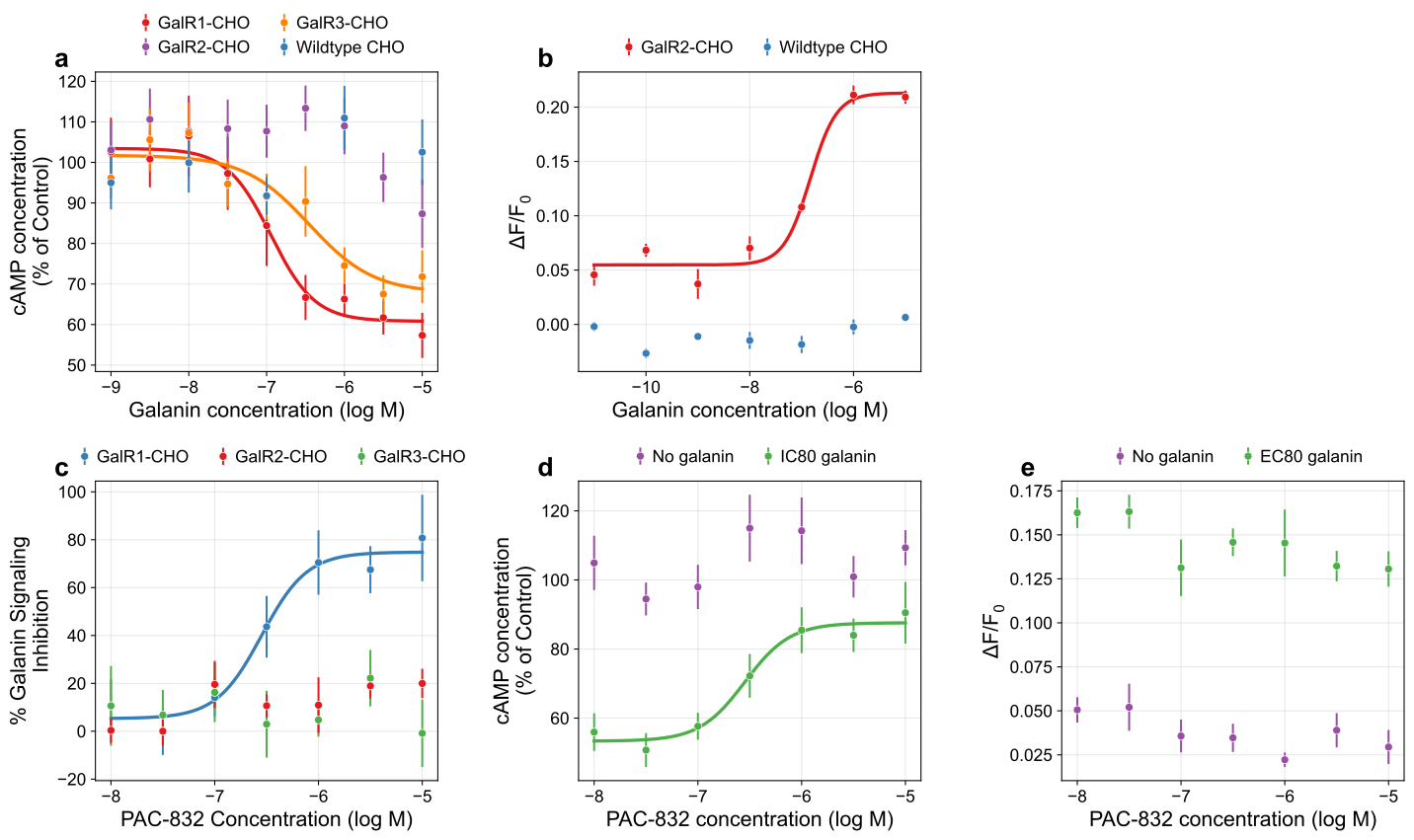
To quantify the effects of PAC-832 on all galanin receptor subtypes, we generated CHO-K1 cell lines stably overexpressing GalR1, GalR2, or GalR3 (Fig. S1a). GalR1 and GalR3 activation was quantified by measuring intracellular cAMP levels in the presence of forskolin and IBMX[33,34]. As expected, galanin treatment by itself produced a significant concentration-dependent suppression of forskolin-induced cAMP in GalR1-CHO and GalR3-CHO cells (p = 2.5×10⁻⁹ and p = 1.3×10⁻⁶, respectively; Fig. 2a). Pretreatment with pertussis toxin (Gi/o-signaling blocker) abolished the inhibitory effect of galanin on cAMP levels in both cell lines (Fig. S1b), confirming that the decrease in cAMP levels was dependent on Gi/o signaling. In GalR2-CHO cells, galanin treatment resulted in a nominally significant but much smaller decrease in cAMP levels (p = 0.03, Fig. 2a), consistent with the fact that GalR2 predominantly couples to Gq/11 rather than Gi/o[18]. Accordingly, we instead quantified GalR2 signaling in GalR2-CHO cells using a calcium fluorescence assay[34]. In this assay, galanin evoked a significant concentration-dependent increase in intracellular Ca2+ fluorescence (p = 8.8×10⁻¹⁴, Fig. 2b), confirming functional GalR2 signaling through Ca2+ mobilization.
Having established robust functional responses to galanin in our cell lines, we evaluated PAC-832 antagonism at all galanin receptor subtypes. In GalR1-CHO cells, PAC-832 reversed cAMP suppression in a concentration-dependent manner when co-administered with galanin (Fig. 2c). Logistic regression yielded a significant concentration response curve (p = 5.2×10⁻⁷, sum-of-squares F-test), with a maximal effect of 74.8% inhibition, and an IC50 of 0.28 μM (95% CI: 0.128–0.629 μM). PAC-832 treatment without galanin did not measurably alter cAMP levels in GalR1-CHO cells (p = 0.31, Fig. 2d).
In GalR3-CHO cells, PAC-832 did not measurably reverse galanin-induced suppression of cAMP at concentrations up to 10 μM (p = 0.87, Fig. 2c, Fig. 2d). In GalR2-CHO cells, PAC-832 likewise did not reduce the galanin-induced Ca2+ response at concentrations up to 10 μM (p = 0.18, Fig. 2c, Fig. 2e). Together, these data demonstrate that PAC-832 is a functional antagonist at GalR1 at sub-micromolar potency, with no detectable functional antagonism at GalR2 or GalR3 up to 10 μM across the primary signaling pathways measured for each receptor subtype.
PAC-832 reverses galanin-inhibited acetylcholine release in vitro
We next assessed the downstream effects of PAC-832 on acetylcholine (ACh) release in SH-SY5Y cells, a human neuroblastoma cell line. SH-SY5Y cells are not natively cholinergic; however, serum starvation and concurrent treatment with retinoic acid (RA) followed by brain-derived neurotrophic factor (BDNF) has been shown to differentiate them toward a cholinergic-like phenotype[36,41]. Consistent with these reports, we observed that differentiated SH-SY5Y cells released significantly more ACh than undifferentiated cells upon treatment with high K+ buffer (quantified using ELISA; Fig. S2b). To verify that the ACh release was Ca2+ dependent, we repeated the experiment in calcium-free buffer with EGTA (calcium-chelating agent), observing that the K+-induced ACh increase was abolished (Fig. S2b). Together, these results confirmed that our differentiated SH-SY5Y cells could be used to model Ca2+-dependent ACh release.
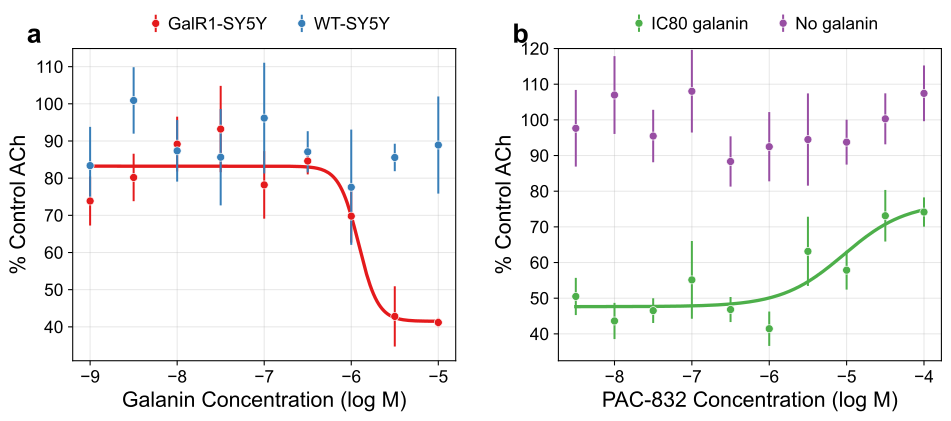
We generated SH-SY5Y cells stably overexpressing GalR1 (Fig. S2a), then differentiated them following the same RA+BDNF protocol as before. Similar to the wildtype SH-SY5Y cells, we observed that differentiated GalR1-SY5Y cells released significantly more ACh than undifferentiated GalR1-SY5Y cells upon depolarization with high-K+ buffer (Fig. S2b). To verify that GalR1 activation inhibited the release of ACh in our differentiated GalR1-SY5Y cells, we pre-treated the cells with galanin to activate GalR1 before K+ treatment. We observed that galanin inhibited K+-induced ACh release in a concentration-dependent fashion (p = 1.7 × 10⁻⁶, IC50 = 1.2 μM, maximal inhibition = 59%; Fig. 3a). Pre-incubation with pertussis toxin abolished the inhibitory effect of galanin on ACh release (Fig. S2c), while galanin treatment in wildtype differentiated SH-SY5Y cells had no effect on ACh release (Fig. 3a), confirming that the inhibitory effect of galanin on ACh release was Gi/o-dependent and mediated through GalR1 in our cells.
Having established a functional in vitro model of GalR1-mediated ACh suppression, we evaluated the effects of PAC-832 treatment in this model system. We co-incubated the cells with PAC-832 and galanin prior to K+ stimulation. We observed significant concentration-dependent rescue of ACh release due to PAC-832 (p = 4.4 × 10⁻⁴, Fig. 3b), with a maximal rescue of 51%, and an EC50 of 9.9 μM (95% CI: 0.78–127 μM). In the absence of galanin, PAC-832 treatment had no effect on ACh release in differentiated GalR1-SY5Y cells (p = 0.76) or wildtype SH-SY5Y cells (p = 0.92, Fig. S2d). Together, these results show that GalR1 activation significantly reduces K+-induced ACh release in vitro, and that PAC-832 treatment rescues ACh release via its inhibitory action on GalR1.
Pharmacokinetic profile and brain exposure of PAC-832 support in vivo testing
Having established potent and selective GalR1 antagonism in vitro, we confirmed that PAC-832 achieved sufficient brain exposure for in vivo testing. We quantified plasma and brain concentrations of PAC-832 in C57BL/6 mice after a single intraperitoneal dose using HPLC-UV. At 1 h after a 30 mg/kg dose (matching the intended highest dose and post-dose time point used for behavioral testing), total plasma and brain concentrations were 56 μg/mL and 40 μg/g respectively, corresponding to a brain:plasma ratio (Kp) of 0.73. Equilibrium dialysis gave fu,plasma of 0.26 and fu,brain of 0.044, yielding a Kp,uu of 0.12. The resulting unbound brain concentration of 7.4 μM exceeded the GalR1 IC50 by 26-fold, demonstrating robust unbound brain exposure at the behavioral timepoint.
PAC-832 improves performance in cognitive tasks in scopolamine-induced mouse model
We next assessed the effects of PAC-832 on cognitive performance in a mouse model of cholinergic dysfunction[42]. We administered scopolamine to healthy male 8-week-old C57BL/6 mice to block cholinergic signaling in the brain and induce transient memory impairment. We then assessed spatial working memory using Y-maze spontaneous alternation[43] and recognition memory using novel object recognition[40] (NOR), with and without co-administration of PAC-832.
As expected, in the Y-maze, scopolamine administration (2 mg/kg) by itself significantly reduced spontaneous alternation rate relative to vehicle controls (vehicle: 68.6 ± 2.3 (s.e.m.) vs. scopolamine: 50.4 ± 3.2; p = 5.5×10⁻⁵; N = 25 per group). Meanwhile, treatment with the cholinesterase inhibitor donepezil prior to scopolamine significantly increased alternation rate (62.9 ± 1.8, p = 0.002 compared to the scopolamine-only group), serving as a positive control.
Upon treating the mice with PAC-832 prior to scopolamine, we observed that the alternation rate was restored in a dose-dependent manner (Fig. 4a). Mice exhibited significantly increased alternation rate for PAC-832 doses of 3 mg/kg (62.0 ± 3.2; p = 0.015 compared to the scopolamine-only group), 10 mg/kg (62.2 ± 2.1; p = 0.0046), and 30 mg/kg (65.3 ± 2.2; p = 5.9×10⁻⁴), but not at 1 mg/kg (48.4 ± 2.0; p = 0.59). The total number of arm entries was not significantly different between any of the treatment groups (Fig. S3b), demonstrating that the differences in alternation rate between groups were not driven by locomotor activity.
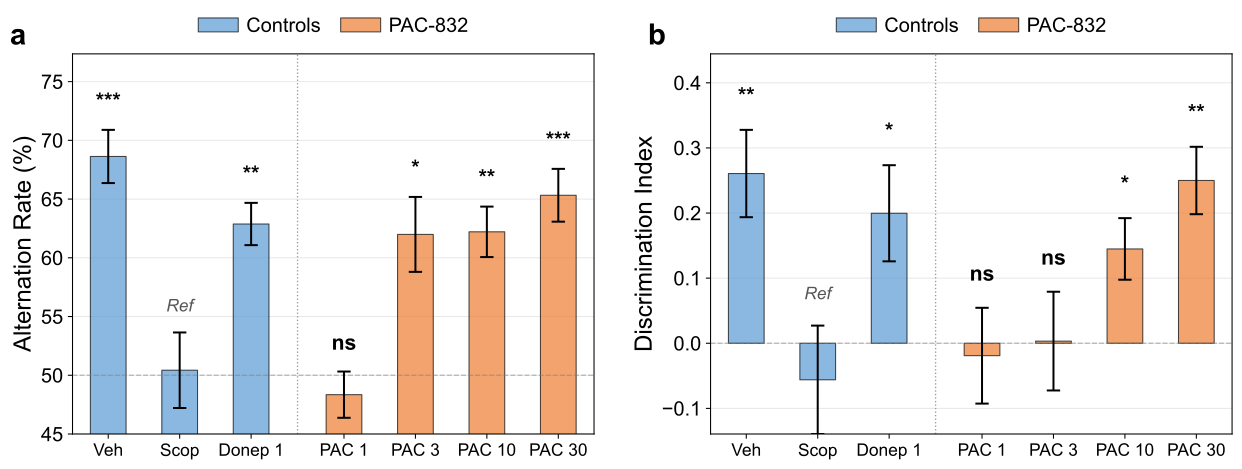
In the NOR task, scopolamine administration similarly reduced novel object discrimination index relative to vehicle controls (vehicle: 0.261 ± 0.067 (s.e.m.) vs. scopolamine: −0.056 ± 0.083; p = 0.005; N = 25). Treatment with the positive control donepezil resulted in a significant increase in discrimination index (0.200 ± 0.074; p = 0.028 compared to the scopolamine-only group).
Upon treating the mice with PAC-832 prior to scopolamine, we observed that the discrimination index was restored in a dose-dependent manner (Fig. 4b). Mice exhibited a significant increase in discrimination index for the 10 mg/kg (0.145 ± 0.047; p = 0.045) and 30 mg/kg dose (0.250 ± 0.052; p = 0.004), but not the 3 mg/kg (0.003 ± 0.076; p = 0.60) or 1 mg/kg dose (−0.019 ± 0.074, p = 0.74). We observed a small decrease in total exploration time for the scopolamine-only group but not any of the other treatment groups (Fig. S3c), demonstrating that differences in discrimination index were not driven by locomotor activity.
Together, these results demonstrate that PAC-832 reverses scopolamine-induced deficits across two complementary cognitive assays at doses of 10 mg/kg and above.
Discussion
In this study, we characterized PAC-832, a small-molecule GalR1 antagonist with sub-micromolar potency (IC50 = 0.28 μM), >30-fold selectivity over GalR2 and GalR3, and excellent brain penetration and drug-like properties. In functional assays, PAC-832 reversed galanin-mediated suppression of acetylcholine release in differentiated cholinergic neurons, and in a scopolamine-induced mouse model of cholinergic dysfunction, PAC-832 administration improved performance in the Y-maze and novel object recognition tasks, with efficacy comparable to the cholinesterase inhibitor donepezil.
More broadly, these findings address a longstanding pharmacological gap in the galanin field. Despite decades of work implicating galanin signaling in CNS function and disease, translational progress has been limited by the lack of subtype-selective, brain-penetrant small molecules. Recent therapeutic development within the galanin system has largely focused on GalR2-directed agonist programs[44,45,46], while GalR1-targeted approaches have remained dependent on peptide tools unsuitable for systemic use. PAC-832 is, to our knowledge, the first GalR1-selective small molecule with sufficient brain exposure to test the effects of GalR1 antagonism following peripheral administration.
Our findings support further investigation of GalR1 antagonism as a strategy for treating cognitive dysfunction associated with impaired cholinergic tone, as well as further development of PAC-832 as a clinical candidate for disorders involving cholinergic dysfunction.
Funding/Financial support
This work was supported by personal funds of the authors. No external funding was received for this research.
Acknowledgements
The authors would like to thank BioCurious for providing cell culture reagents, tissue culture room access, HPLC-UV access, and access to liquid handling robotics. The authors would also like to thank Darach M. for assistance with bacterial transformation and plasmid preparation.
Conflict of interest
Douglas Y. is the founder of Pace Pharmaceuticals, which holds the patent for PAC-832. Dongyuan Y. is an employee of Pace Pharmaceuticals.
Data availability statement
OT-2 protocol code, raw plate reader data, per-well processed concentrations, and analysis code for all cell experiments are deposited at https://github.com/douglasyao/pac-832-supplementary-data. Raw videos, tracked coordinates, arm-entry/object exploration timestamps, and analysis code for all mouse experiments are deposited on Zenodo (https://zenodo.org/records/19058360).
Ethical statement
All animal procedures were approved by the Charles River Laboratories Institutional Animal Care and Use Committee (Protocol #2025-2594) prior to testing. No human subjects were involved in this study.